
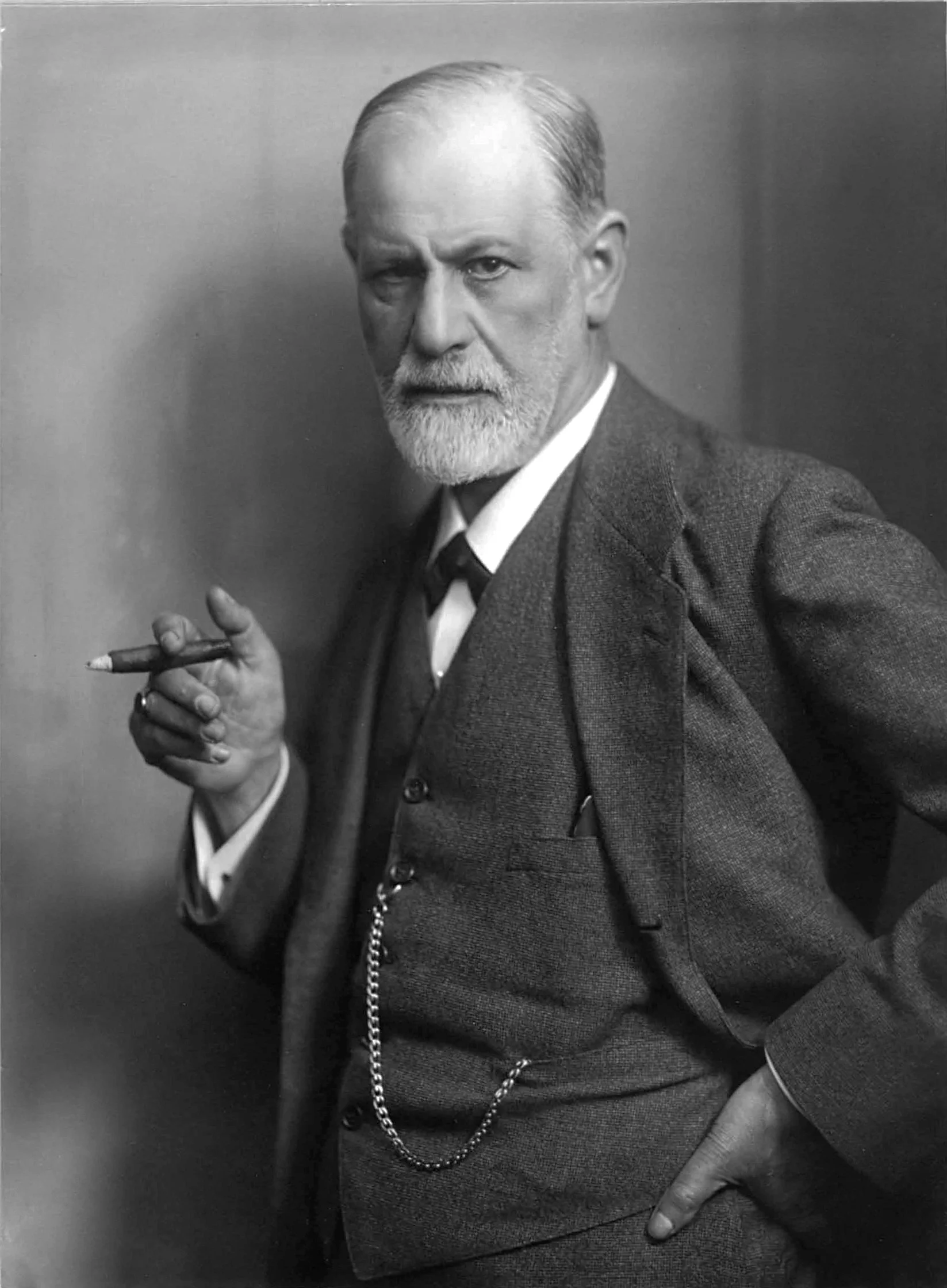
Sigmund Freud
The Father of Psychoanalysis
Sigmund Freud is universally recognized as the Father of Psychoanalysis, a revolutionary meta-psychological framework and clinical method designed to treat psychopathology through deep, exploratory dialogue. By developing this discipline, Freud fundamentally shifted how the modern world understands human behavior, moving away from purely neurological explanations toward a profound investigation of the inner mind. Despite his rigorous medical background, Freud ultimately did not view psychoanalysis as identical to an exact science. For him, the human psyche was something beyond a mere output of cerebral cogs and wheels, demanding a systematic interdisciplinary exploration of the conscious and unconscious mind.
To truly map the complexities of human desire, neurosis, and motivation, Freud believed his discipline had to draw from a vast and diverse spectrum of human knowledge. He positioned psychoanalysis at the intricate crossroads of both the human and exact sciences. Freud understood that the vastness of the human mind could not be approached from a reductionist referential.
The Architecture of the Unconscious
At the core of Freud’s psychoanalytic theory was his groundbreaking conceptualization of the unconscious. He fundamentally rejected the idea that humans are fully aware of, or in control of, the recesses of their own minds. Instead, he understood the unconscious as a vast, hidden reservoir containing our forgotten and repressed memories, primal instincts, unresolved conflicts, and socially unacceptable desires. To explain this, Freud often used the metaphor of an iceberg:
The Conscious Mind: the small, visible tip of the iceberg above the water, representing the thoughts and perceptions we are currently aware of.
The Unconscious Mind: the massive, submerged bulk of the iceberg. Though hidden from view, it is the primary pulsion driving the iceberg's movement.
Freud believed that while we are oblivious to this hidden realm, it continuously exerts a powerful, unseen influence over our daily behaviors, dreams, slips of the tongue, emotional responses, and most of our repetitive behaviours and pulsions that go against our conscious will. For Freud, the ultimate goal of psychoanalysis was to bring these buried, unconscious elements up to the surface of conscious awareness, allowing individuals to confront and resolve the hidden forces dictating their lives.
The Freudian Line: New Horizons
While Freud is celebrated as a pioneer who mapped the uncharted territories of the unconscious, he was opposed to psychoanalysis as an unregulated field. He recognized that, without institutional oversight, his revolutionary framework risked being diluted, misappropriated by charlatans, or absorbed by the conventional medical and psychiatric establishments that initially rejected his core theories.
In 1910, he championed the creation of his own regulatory authority, the International Psychoanalytical Association (IPA), designed to serve as the ultimate gatekeeper for the profession, establishing rigorous training standards, enforcing theoretical orthodoxy, and ensuring that psychoanalysis survived not as a fleeting therapeutic trend, but as a protected, disciplined, internationally standardized, and highly respected domain of knowledge and applied human science.
Following Sigmund Freud, several key disciples dedicated themselves to preserving and expanding his original line, often defending it against early theoretical deviations. Foremost among these loyalists were his daughter Anna Freud, and Ernest Jones. Early adherents like Karl Abraham and Marie Bonaparte played crucial roles in institutionalizing his work within the International Psychoanalytical Association (IPA). His disciples also took over the advancement of psychoanalytical subdomains and the direct personal, theoretical and clinical formation of successive generations of psychoanalysts, thus securing their direct connection to Freud’s original line of theory and practice.